Online Arabic lessons for kids provide a fun, engaging, and effective way for children to learn Arabic from the comfort of their home. At Quran Academy, we believe that every child deserves personalized attention and a learning experience tailored to their age, interests, and skill level.
Our experienced teachers use interactive exercises, stories, games, and practical examples to make learning enjoyable while ensuring real progress. By joining our lessons, children not only develop reading, writing, and speaking skills in Arabic but also build confidence, cultural awareness, and a lifelong love for the language.
Interactive Arabic Learning for Kids Online
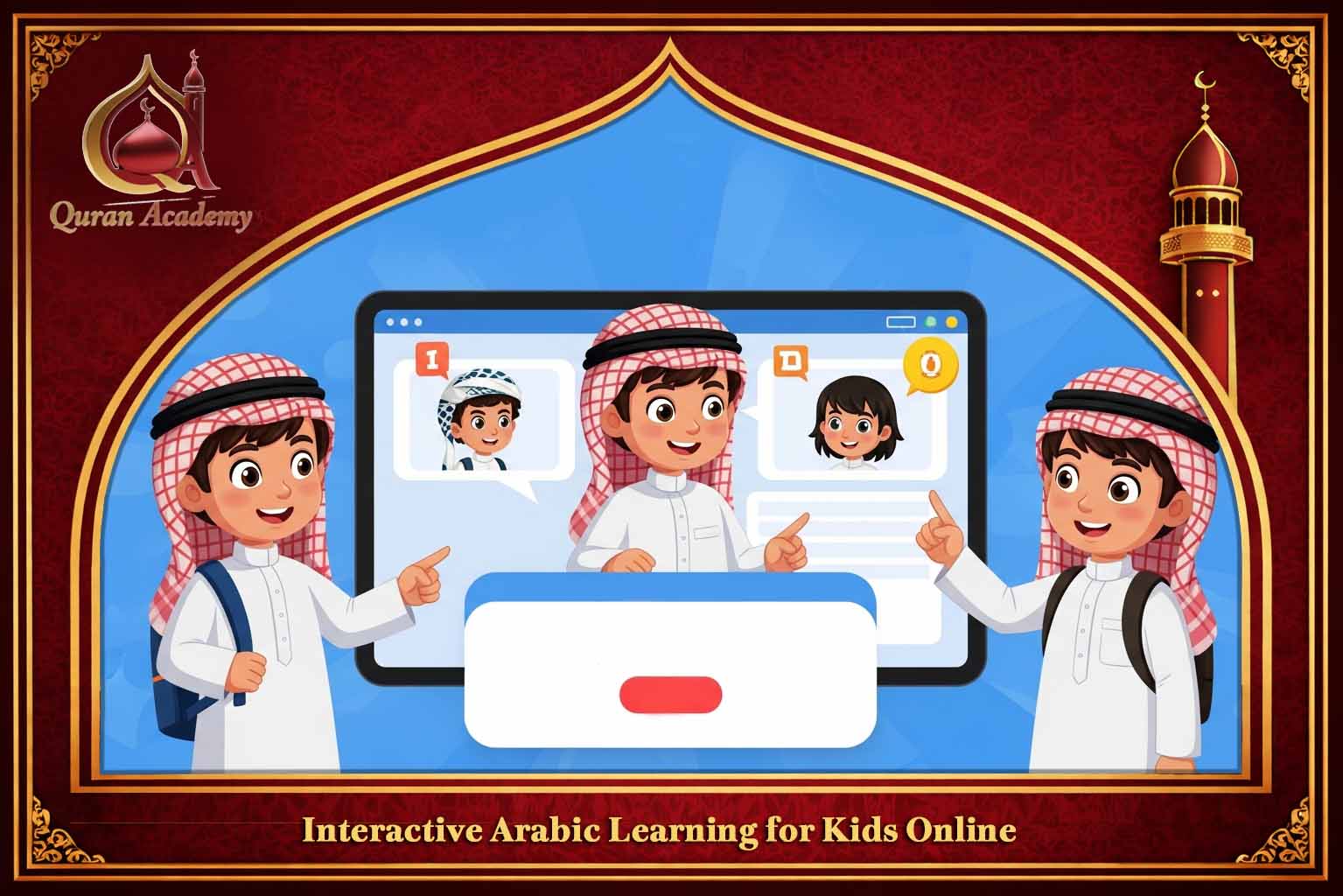
Online Arabic lessons for kids provide a practical, fun, and engaging way for children to learn Arabic from home. These lessons are designed for different age groups and learning levels, helping children develop reading, writing, speaking, and comprehension skills. By using modern teaching methods and technology, children enjoy their learning journey while achieving meaningful progress.
Starting Arabic at a young age gives children a natural advantage. They can grasp grammar rules easily, learn vocabulary faster, and communicate with confidence. These online lessons go beyond memorizing letters—they teach children how to use Arabic in real life, from simple conversations to storytelling.
Online Quran Academy
Learning Arabic has become easier and more effective through the Online Quran Academy, which provides an interactive learning environment for children focusing on reading, writing, and speaking Arabic.
At Quran Academy, we use innovative teaching methods including interactive stories, educational games, and practical exercises that make learning fun and engaging.
Lessons are tailored to suit different skill levels, from beginners to advanced learners, ensuring continuous development of your child’s Arabic skills. With the support of our experienced teachers, children can confidently learn and use Arabic in their daily lives while developing a love for the language and Arabic culture from an early age.

Why Learning Arabic Matters for Children
Learning Arabic early equips children with academic, social, and cultural benefits. Children who start learning a language young tend to speak it fluently and understand its structure more easily than those who start later.
Arabic also improves cognitive abilities. Learning a new language enhances memory, concentration, and problem-solving skills. Additionally, children gain cultural awareness and empathy by exploring Arabic traditions, stories, and values. Through Online Arabic lessons for kids, children learn to form sentences, express ideas, and communicate confidently, while enjoying the process of learning.
Moreover, bilingual or multilingual children often perform better in school. They can switch between tasks more efficiently and develop stronger critical thinking skills. Learning Arabic gives them an edge academically and socially.
Learn also: learn quran online academy
Structured Lesson Levels for Children
The lessons follow a structured approach, allowing children to progress gradually from beginner to advanced levels. Teachers create engaging, interactive activities to match each child’s level, ensuring they remain motivated and challenged.
Beginner Level
The beginner level suits children who have little or no prior Arabic knowledge. At this stage, children:
- Learn the Arabic alphabet and pronunciation
- Practice writing letters and forming words
- Acquire basic vocabulary, such as greetings, family members, and common objects
- Practice simple conversations for everyday situations
Teachers make lessons engaging by using songs, flashcards, games, and storytelling. Users can also explore best online arabic classes for kids for more related options.For example, children sing the alphabet song while pointing at letters, which helps them remember letters and words quickly. Teachers also use animated videos and interactive quizzes to reinforce learning.
At this stage, children focus on building a strong foundation in Arabic. Users can also explore arabic letters for kids for more related options.They learn to recognize letters, pronounce words correctly, and form simple phrases. These skills are essential for moving to the next level with confidence.
Intermediate Level
The intermediate level builds on the beginner foundation. Children:
- Form short sentences and ask questions
- Engage in conversations about hobbies, school, meals, and daily routines
- Practice listening comprehension with short dialogues and audio materials
- Expand vocabulary with everyday nouns, verbs, and adjectives
Teachers encourage children to speak Arabic daily. They provide real-life examples, like describing objects in the room or telling what they did during the day. Reading short texts and answering comprehension questions strengthens their understanding of sentence structure.
Moreover, interactive exercises, such as role-playing games and storytelling, keep children motivated. They start thinking in Arabic instead of translating from their native language, which accelerates fluency.
Upper-Intermediate Level
At this level, children construct longer sentences, narrate stories, and discuss topics more confidently. Lessons focus on:
- Directions, weather, time, seasons, and hobbies
- Storytelling and writing exercises to enhance communication skills
- Vocabulary for feelings, actions, and daily life situations
- Practical conversation exercises to prepare children for real-world communication
Teachers guide children through dialogues and situational exercises. For example, children might plan a pretend trip, giving directions and describing their activities in Arabic. They also write short essays about hobbies or daily routines, which improves writing fluency.
Upper-intermediate lessons emphasize critical thinking. Children learn to organize ideas logically and express themselves clearly. Teachers provide feedback and correct mistakes while encouraging independent thinking.
Advanced Level
The advanced level is designed for children who can communicate fluently, understand complex texts, and write longer paragraphs. At this stage, lessons focus on:
- Discussing emotions, school life, hobbies, and social topics
- Reading and understanding stories, articles, and short essays
- Writing diary entries, letters, or creative pieces in Arabic
- Participating in debates, discussions, and role-plays to refine speaking skills
Teachers use real-life scenarios to teach practical language use. For example, best online arabic classes for kids describe a trip they took, express opinions about their favorite activities, or explain solutions to problems. This hands-on approach ensures that children achieve full language proficiency and confidence in Arabic.
Learn also: online hifz program
Key Skills Children Gain
Through Online Arabic lessons for kids, children develop essential skills:
- Reading: They understand texts suitable for their age and improve reading fluency
- Writing: They gradually write longer and more complex sentences
- Comprehension: They follow conversations, instructions, and stories in Arabic
- Speaking: They communicate clearly and confidently in everyday situations
Teachers integrate games, stories, and practical examples into lessons. This immersive approach helps children retain knowledge, enjoy learning, and remain engaged.
Read also: Hijrah of Prophet Muhammad
How Online Learning Works
Online learning allows children to study Arabic in the comfort of their home. Parents can supervise, provide support, or simply encourage participation. The learning process begins with a free evaluation session. Teachers assess each child’s knowledge, skills, and confidence. Based on this assessment, they recommend the appropriate lesson level.
After enrollment, children receive a detailed schedule and access to study materials. Online learning offers several advantages:
- Lessons can be revisited multiple times to reinforce understanding
- Children study in a safe, distraction-free environment
- Interactive tools, videos, quizzes, and exercises make learning engaging
- Teachers provide immediate feedback and adjust lessons according to progress
Moreover, online learning fosters independence. Children learn to manage their study time, practice consistently, and take responsibility for their learning.
Learn also: online quran school
Benefits Beyond Language
Online Arabic lessons also improve children’s cognitive, social, and emotional skills:
- Memory and brain development: Learning Arabic strengthens neural connections
- Problem-solving and critical thinking: Grammar, sentence structures, and vocabulary exercises improve logical thinking
- Cultural understanding: Exposure to Arabic stories, poems, and traditions builds appreciation for diversity
- Confidence and communication: Children develop self-assurance in speaking and expressing ideas
Learning Arabic encourages children to explore other languages and cultures. It boosts curiosity, empathy, and adaptability—skills that benefit them academically and socially.
How Parents Can Support Their Child’s Arabic Learning
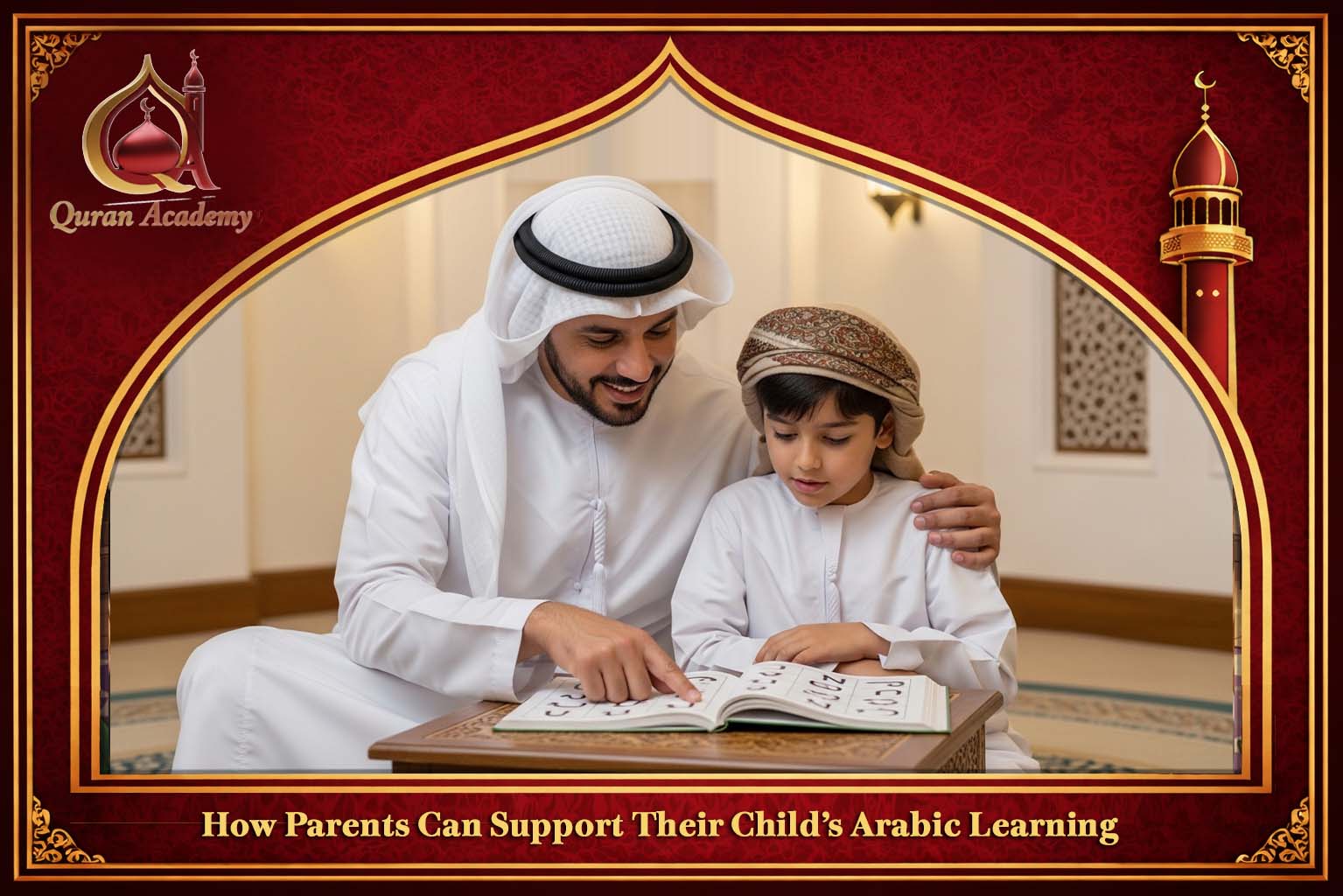
Parents can actively support their child’s Arabic learning by following these practical strategies:
- Review lessons regularly: Ask your child to explain what they learned in their own words to reinforce understanding and boost confidence.
- Encourage daily use: Motivate children to describe objects, narrate activities, or greet family members in Arabic.
- Provide diverse resources: Use Arabic books, flashcards, educational games, and interactive videos to make learning engaging and fun.
- Celebrate achievements: Reward milestones such as learning a new word, completing a lesson, or reading a short story to maintain motivation.
- Participate occasionally: Join lessons or practice exercises with your child to model correct language use and strengthen learning.
- Create a positive environment: Establish a supportive home environment where children feel encouraged to speak, read, and explore Arabic daily.
Frequently Asked Questions
Here are some common questions parents often ask about their child’s Arabic learning journey. These answers help clarify how lessons work, what to expect at each level, and how children can make the most of their online Arabic classes.
Q1: Can children start with no prior knowledge?
A: Yes, beginner lessons cover letters, basic vocabulary, and simple phrases suitable for children with no prior knowledge.
Q2: Can lessons fit around school schedules?
A: Absolutely. Lessons are flexible and can accommodate children’s daily routines.
Q3: Can parents monitor progress?
A: Yes, teachers communicate regularly with parents and provide tips to reinforce learning at home.
In conclusion, Online Arabic lessons for kids provide a unique opportunity for children to learn Arabic effectively and enjoyably from home. At Quran Academy, our carefully designed lessons, experienced teachers, and interactive methods ensure that every child progresses at their own pace while building confidence, communication skills, and a deeper understanding of the Arabic language.
Whether your child is a beginner or already has some knowledge of Arabic, our structured programs guide them from basic vocabulary to advanced proficiency. Enroll your child today and give them the gift of language, culture, and lifelong learning with Quran Academy.
Read articles that might interest you: