Before choosing a specific program, it helps to understand the general options for learning Quran online: live one-on-one classes, small group lessons, or self-paced study with periodic teacher check-ins.
Each path suits a different kind of learner. This guide breaks down what to expect from each option, so you can decide what fits your schedule and goals before enrolling in a specific Quran program.
How to Start Learning the Quran: A Step-by-Step Guide

Embarking on the journey of learning the Quran is both a spiritual and personal decision that requires intention, planning, and consistency. Whether you are beginning your studies or looking to deepen your understanding, here are some important steps to guide you on this path.
Set Clear Goals
First and foremost, decide what aspect of the Quran you want to focus on: recitation, memorization, or understanding its meaning. This decision is crucial, as it will influence the resources and methods you need. For example, if your goal is to learn the Quran online, you may look for platforms that cater specifically to recitation or memorization.
Choose the Right Learning Method
There are several ways to learn the Quran. You could attend in-person lessons, participate in online courses, or even combine both approaches depending on your schedule and access to teachers. Platforms like Quran Academy provide flexibility and convenience, making it easier to learn Quran online at your own pace. Online learning offers the advantage of flexibility, allowing you to study at times that suit you best.
Start with Small Steps
When starting, it’s best to begin with short and easy chapters like Surah Al-Fatiha or Surah Al-Ikhlas. This approach will help you build your confidence and improve your skills progressively. Once you become comfortable, you can move on to longer surahs and more complex verses. Small, consistent efforts will pay off in the long run.
Find a Teacher or Mentor
A teacher or mentor can be incredibly helpful in guiding you through your Quran studies. Whether you find one at your local mosque or choose to connect with an instructor online, having someone to guide you can significantly enhance your learning experience. With online options available, it’s easier than ever to find expert guidance through platforms that offer personalized support for learning the Quran online.
Stay Consistent
Consistency is key. Even dedicating just 15 minutes a day can help you stay on track and make steady progress. Set aside regular time each day to study the Quran, making it a priority in your routine. Using platforms like Quran Academy can also ensure that you stay on track and progress steadily by offering structured courses and daily learning schedules.
In conclusion, learning the Quran online is a powerful tool for anyone looking to begin or continue their Quranic studies. With dedication and the right resources, such as Quran Academy, you’ll find that learning the Quran can be both manageable and meaningful.
Online Quran Academy
is the perfect solution for those seeking to learn the Quran with flexibility and high quality. Through Quran Academy, you can access interactive and specialized lessons online, taught by professional instructors offering content tailored to all levels.
Whether you are a beginner or looking to improve your recitation, memorization, or understanding of Tafsir, Quran Academy provides a comprehensive learning environment to help you achieve your goals.
The platform allows you to study at any time and from anywhere, making it easy to interact with teachers and fellow students, ensuring you deepen your connection with the Quran in innovative ways.

The Role of Teachers in Learning the QuranUsers can also explore Quran Online for Beginners for more related options.
Learning the Quran is a journey that benefits greatly from the guidance of a skilled teacher. While self-learning holds value, the teacher’s role remains crucial for a deep and comprehensive understanding of the sacred text. Below are some key points highlighting the importance of teachers in the process of learning the Quran.
The Teacher as a GuideUsers can also explore quran tutor for beginners for more related options.
A qualified teacher is essential for personalized instruction. Unlike self-learning, where progress can be slow and unchecked, a teacher can immediately correct mistakes, ensuring the learner is on the right path.
Teachers also offer structured learning, which makes the Quran more approachable, especially for beginners. Their feedback helps in refining recitation, memorization, and understanding. If you’re looking to learn Quran online, platforms like online arabic academy for kids provide professional instructors who can guide you step by step.
Preserving the Tradition
The Quran has been passed down orally for centuries, and this tradition continues today through teachers. Whether in traditional settings or online platforms, teachers ensure that the recitation (tajweed) and memorization remain accurate.
This preservation of tradition is vital for maintaining the authenticity of the Quran as it was revealed. By choosing to learn Quran online through qualified teachers, students continue to benefit from this ancient tradition, even in a modern format.
Adding Depth to Learning
Teachers bring life to the Quran by sharing stories, historical context, and moral lessons embedded in the verses. This adds depth to the learning process, turning it from a technical skill into a meaningful spiritual experience. For learners, understanding the context of each verse can lead to a more profound connection to the Quran.
If you decide to learn Quran online, platforms such as Quran Academy offer lessons that go beyond just memorization to help you understand the message behind the verses.
The Impact of Online Platforms
With modern technology, learning from experienced teachers has become more accessible. Online platforms now offer both individual and group lessons, where teachers continue to provide valuable feedback. Students can now learn Quran online from anywhere, at any time, under the guidance of qualified instructors. Quran Academy is an example of an excellent platform where you can learn Quran online with expert teachers who can guide you at every stage.
In conclusion, while self-study can be a part of learning, having a teacher — whether in person or online — is invaluable in ensuring accurate, meaningful, and holistic learning of the Quran. With platforms like Quran Academy, learning the Quran online has never been easier or more effective.
Read also:wudu step by step
Challenges in Learning the Quran
Although learning the Quran brings immense benefits, it also presents certain challenges that require patience and perseverance. For beginners, the Arabic script and pronunciation can be particularly daunting, especially for those who are not native Arabic speakers. Additionally, memorization requires continuous effort and regular review to prevent forgetting. Moreover, understanding the deeper meanings of the Quran may take years of study, especially for those without a background in Islamic sciences.
Overcoming the Difficulty of Arabic Script and Pronunciation
The Arabic script is intricate, and for non-native speakers, learning to read and pronounce Quranic verses accurately can be challenging. This challenge is often one of the first hurdles for those who wish to learn Quran online. However, with consistent practice and the support of experienced teachers, these difficulties can be overcome. Platforms like Quran Academy offer specialized courses designed to teach the correct pronunciation and reading techniques for beginners.
The Effort Required for Memorization
Memorizing the Quran requires significant dedication. Repetition and regular review are essential to retain what has been learned. Without proper revision, it’s easy to forget verses, especially as you progress through longer surahs. For those who choose to learn Quran online, regular practice sessions and revision schedules provided by platforms like Quran Academy can help maintain progress and reduce the risk of forgetting.
Understanding the Deeper Meanings of the Quran
The Quran is filled with layers of meanings that require deep reflection and study. Gaining a profound understanding of these meanings, particularly for those without an academic background in Islamic studies, can take years of dedicated learning. However, online platforms offer resources that break down complex concepts into simpler terms, making it easier for anyone to learn Quran online and understand its deeper wisdom.
The Role of Support in Overcoming Challenges
Support from teachers, peers, or family members plays a crucial role in staying motivated and overcoming obstacles in Quranic learning. Teachers guide students through difficult areas, ensuring they stay on track. Online learning platforms like Quran Academy also provide a sense of community, offering both individual lessons and group support, which can significantly improve the learning experience.
In conclusion, while learning the Quran comes with challenges, these obstacles can be overcome with persistence, the right support, and the use of effective online resources. Quran Academy offers structured lessons that help learners address these challenges, ensuring that learning the Quran online becomes an achievable and rewarding experience.
Learning the Quran in the Digital Age
Technology has made learning the Quran more accessible than ever before. With online platforms, mobile apps, and video lessons, a wealth of resources is now available for students of all levels. These digital tools have transformed the learning process, making it easier to learn Quran online from anywhere at any time.
Access to Resources for All Levels
Digital platforms offer step-by-step guides for beginners to learn the proper rules of Tajweed, while advanced learners can use audio recitations to refine their pronunciation. Interactive features such as quizzes, progress trackers, and instant feedback from teachers recreate the traditional learning experience in a virtual format. Platforms like Quran Academy make it easier to learn Quran online, providing structured lessons and expert guidance to ensure steady progress.
The Impact on Children and Busy AdultsUsers can also explore learn Quran online for beginners for more related options.
The digital shift has had a significant impact on both children and busy adults. Parents can enroll their children in online courses tailored for young learners, complete with visual aids and interactive games that make learning fun.
This approach is especially useful for families who want their children to learn Quran online in a way that suits their attention span and learning style. For adults with tight schedules, online courses offer the flexibility to arrange lessons around their work commitments, ensuring that learning the Quran fits seamlessly into their modern lifestyles.
Global Connectivity and Diverse Teaching Methods
One of the most significant advantages of the digital age is the ability to connect with qualified teachers from around the world. Through online platforms, students can interact with instructors from different countries, gaining exposure to various teaching methods. Whether you’re learning Quran online through one-on-one lessons or in group classes, you benefit from a wide range of perspectives and approaches to Quranic education.
In conclusion, the digital age has revolutionized the way we learn Quran online. With the support of platforms like Quran Academy, students can access high-quality resources, learn at their own pace, and connect with teachers worldwide, making Quranic education more accessible and flexible than ever before.
The Benefits of Learning the Quran
Learning the Quran offers a wide range of benefits that extend beyond the spiritual, enriching the mind, heart, and soul. These advantages impact not only one’s connection to Allah but also cognitive and personal growth.
Spiritual Connection
Reciting or memorizing the Quran brings a deeper connection to Allah. Every verse reminds us of His mercy and guidance, promoting inner peace and strength. For many, this connection becomes a source of resilience during life’s challenges. By choosing to learn Quran online, you can strengthen this bond at your own pace, with guidance from platforms like Quran Academy.
Cognitive Development
Engaging with the Quran sharpens mental abilities. Memorizing verses boosts memory, while practicing Tajweed improves auditory skills and language accuracy. Studies show these activities stimulate brain function, benefiting learners of all ages, especially children. By deciding to learn Quran online, you can develop these cognitive skills in a structured and effective way, ensuring consistent mental growth.
Moral and Emotional Growth
The Quran teaches virtues such as honesty, kindness, and justice. Learning and reflecting on its verses helps individuals embrace these values, shaping their character and interactions. As you learn Quran online, you also nurture your emotional intelligence, becoming more compassionate and mindful in everyday life.
Cultural and Linguistic Enrichment
For non-Arabic speakers, learning the Quran is a chance to learn Arabic, which is central to Islamic heritage. This deepens their appreciation of the text and connects them to a rich cultural legacy shared by Muslims worldwide. Platforms like Quran Academy help learners master the Quran and Arabic, enriching their understanding of Islam.
Strengthening Community Bonds
Learning the Quran is often done in group settings—whether in mosques, online classes, or family circles. These interactions promote a sense of unity and support, strengthening social bonds within the Muslim community. Whether you’re learning Quran online or in person, being part of a learning community fosters collaboration and growth.
In conclusion, the benefits of learning the Quran are vast. It enhances spiritual well-being, cognitive function, emotional growth, and cultural understanding. By using platforms like Quran Academy, you can experience these benefits in a structured, flexible, and supportive environmen
Methods of Learning the QuranUsers can also explore best way to learn quran for more related options.
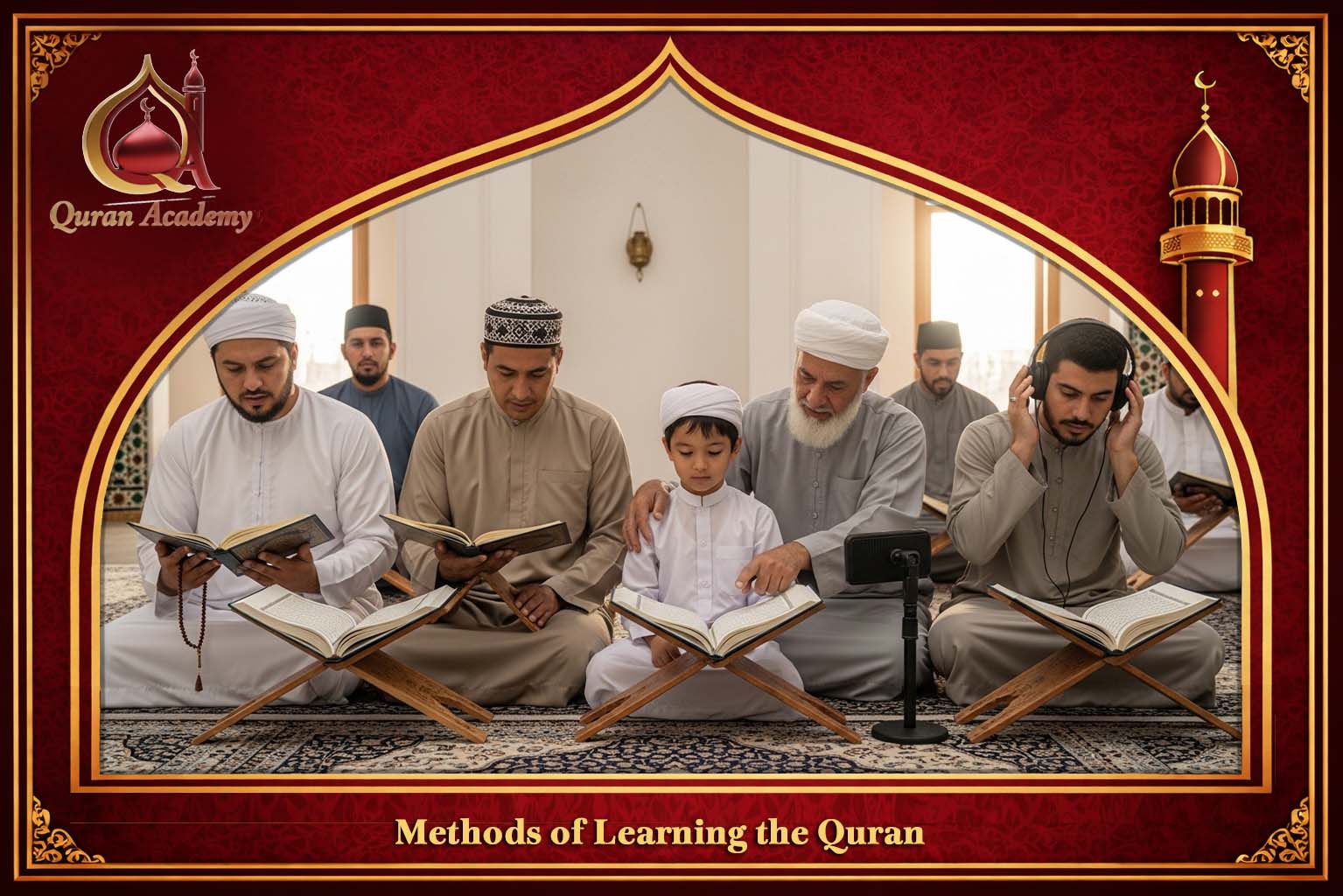
The journey of learning the Quran, written in Arabic, varies based on individual goals and personal circumstances. Over time, these methods have evolved, blending traditional approaches with modern innovations to cater to diverse learners.
Recitation and Tajweed
One of the primary ways to begin learning the Quran is by mastering its recitation. This involves learning Tajweed, the set of rules governing pronunciation, intonation, and rhythm. Tajweed ensures that the Quran is recited as it was revealed, preserving its beauty and authenticity.
Beginners typically start with short surahs and gradually progress to longer ones under the guidance of a teacher or through structured lessons. Learning Quran online through platforms like Quran Academy can help perfect this skill, with interactive tools and real-time feedback.
Memorization (Hifz)
Memorizing the Quran, known as “Hifz,” is a revered practice in Islam. Students commit to memorizing the entire Quran or selected portions, a process that requires dedication, repetition, and discipline.
Traditionally, this was done in Quranic schools or with local scholars, but today, electronic resources and audio recordings have made memorization more accessible. Becoming a Hafiz (one who memorizes the Quran) is a prestigious achievement, offering spiritual rewards and social respect. Many choose to learn Quran online through platforms that provide structured memorization programs.
Understanding and Tafsir
While recitation and memorization focus on the form of the Quran, understanding its meanings takes learning to a deeper level. Tafsir (interpretation) delves into the historical context, linguistic details, and lessons derived from the verses. This approach is ideal for those who wish to reflect on the messages of the Quran and apply them in their lives.
Although knowledge of Arabic is helpful, translations and explanations make Tafsir accessible to non-Arabic speakers. Learning Quran online offers courses in Tafsir, allowing learners to study the Quran’s deeper meanings with expert guidance from scholars.
Online Learning
The digital age has revolutionized Quranic education, offering students the ability to learn from anywhere in the world. Online platforms provide live lessons, recorded classes, and interactive tools suitable for both beginners and advanced learners.
This flexibility has opened up opportunities for those who may not have access to traditional teachers, making Quran learning a global endeavor. Platforms like Quran Academy make it easier than ever to learn Quran online, offering a variety of resources tailored to individual needs.
frequently asked questions about Learn quran online
cover a range of topics such as course availability, certification, and how to get started. These FAQs aim to guide learners in choosing the right platform, such as Quran Academy, and help them navigate the online learning process effectively.
1. What are the advantages of learning the Quran online?
Learning the Quran online offers flexibility in time and location, providing access to professional instructors and a variety of educational courses. It also allows you to learn at your own pace, making the learning process more effective.
2. Can children learn the Quran online?
Yes, many platforms like Quran Academy offer specialized programs for children, helping them memorize and understand the Quran in an engaging and interactive way.
3. Can I learn the Quran online if I am a beginner?
Absolutely! Quran Academy offers lessons for all levels, from beginners to advanced learners, with content tailored to each level of understanding.
4. Do I need any prior experience to learn the Quran online?
No, prior experience is not required to learn the Quran online. Courses are designed for all ages and skill levels, and you can start from the basics.
5. How can I interact with teachers during online learning?
Most platforms like Quran Academy allow direct interaction with teachers through live lessons or messaging, enabling you to ask questions and seek clarifications during lessons.
In conclusion, Quran Academy provides an invaluable opportunity for Muslims around the world to learn Quran online in a flexible, accessible, and comprehensive manner.
By offering personalized lessons and expert guidance, the academy ensures that each learner can progress at their own pace, regardless of their current knowledge level.
Whether you are looking to strengthen your faith or deepen your understanding of the Quran, Quran Academy stands as a reliable and supportive platform to guide you on your Quranic journey. Embrace this modern approach to learning and enhance your connection with the Holy Quran.
read also: