How to pray in Islam is one of the most frequently asked questions by new Muslims and those who want to improve their understanding of Salah. This complete guide explains Salah in a simple, practical, and step-by-step way based on the Qur’an and the Sunnah of Prophet Muhammad (ﷺ).
It focuses on clarity, ease of learning, and correct practice so that beginners can perform prayer with confidence and understanding. The teachings reflect authentic Islamic knowledge as commonly taught through trusted learning platforms like quran academy.
Learning Salah is not only about actions, but also about developing consistency, mindfulness, and a strong spiritual connection with Allah in daily life.


Understanding the Importance of Salah in Islam
Salah is mentioned repeatedly in the Quran as a defining characteristic of believers. It is the first act that will be judged on the Day of Resurrection. If it is correct, other deeds become meaningful.
The purpose of Salah includes:
- Strengthening the connection with Allah
- Developing self-discipline and patience
- Staying away from sins
- Bringing peace and mental clarity
Learning from reliable sources such as quran academy, helps beginners build correct foundations without confusion or misunderstanding.
The Five Daily Prayers in Islam
Muslims are required to pray five times a day:
- Fajr (before sunrise)
- Dhuhr (midday)
- Asr (afternoon)
- Maghrib (sunset)
- Isha (night)
Each prayer consists of units called Rak’ahs, which vary depending on the prayer.
Salah is divided into:
- Fard (obligatory)
- Sunnah (recommended practice of the Prophet ﷺ)
- Nafl (voluntary prayers)
Missing Fard prayers without a valid reason is considered a serious matter in Islam.Parents today are increasingly seeking safe and effective ways to teach their children Islamic values, and islamic classes for kids provide structured lessons that help young learners understand Quran, manners, and basic Islamic teachings in an engaging way.
Read also: female quran tutor
Preparation Before Performing Salah
Before praying, a Muslim must prepare both physically and mentally.
1. Purification (Wudu)
Wudu is essential before Salah unless a major purification (Ghusl) is required. It includes washing the hands, mouth, nose, face, arms, wiping the head, and washing the feet.Users can also explore wudu step by step for more related options.
Performing wudu step by step is essential for every Muslim before prayer, ensuring physical cleanliness and spiritual preparation. It begins with intention, followed by washing the hands, rinsing the mouth and nose, washing the face, arms up to the elbows, wiping the head, and finally washing the feet.
2. Clean Clothing and Place
The body, clothes, and prayer area must be clean.
3. Covering the Awrah
Men and women must dress modestly according to Islamic guidelines.Users can also explore What is Ihram for more related options.
4. Facing the Qiblah
All prayers must be directed toward the Kaaba in Makkah.
5. Intention (Niyyah)
The intention is made in the heart before starting prayer. It does not need to be spoken out loud.
These steps are commonly taught in structured learning systems such as quran academy, which helps beginners practice correctly.
Step-by-Step Guide: How Salah is Performed
Understanding the physical steps is essential for anyone learning how to pray in Islam, but each movement carries deep spiritual meaning.
1. Starting the Prayer (Takbir)
Begin by standing straight, facing the Qiblah, and raising both hands while saying:
“Allahu Akbar” (Allah is the Greatest)
This marks the official start of Salah.
2. Standing Position (Qiyam)
Place your right hand over your left on the chest or upper stomach area.
Then recite:
- Opening supplication (Thana)
- “A’udhu billahi minash shaytan ir-rajim”
- “Bismillah ir-Rahman ir-Rahim”
- Surah Al-Fatiha
Surah Al-Fatiha is the most important chapter in the Qur’an and is recited in every Rak’ah.
3. Additional Recitation
After Surah Al-Fatiha, recite another Surah or verses from the Qur’an in the first two Rak’ahs.
A commonly taught short Surah is Surah Al-Ikhlas, which emphasizes the oneness of Allah.
4. Bowing (Ruku)
Say “Allahu Akbar” and bow down with your back straight and hands on your knees.
In this position, repeat:
“Subhana Rabbiyal Adheem” (Glory is to my Lord, the Most Great)
5. Standing After Ruku
Rise up and say:
“Sami’ Allahu liman hamidah”
“Rabbana lakal hamd”
This reflects gratitude and praise to Allah.
6. First Prostration (Sujood)
Go down into prostration, placing forehead, nose, palms, knees, and toes on the ground.
Say:
“Subhana Rabbiyal A’la” (Glory is to my Lord, the Most High)
This is the closest position a believer is to Allah.
7. Sitting Between Two Prostrations
Sit briefly and say:
“Rabbighfir li” (My Lord, forgive me)
Then go into the second prostration.
8. Completing One Rak’ah
After the second Sujood, one Rak’ah is complete.
Repeat the same structure for the next Rak’ahs depending on the prayer.
9. Final Sitting (Tashahhud)
After completing the required Rak’ahs, sit and recite Tashahhud:
This includes declarations of faith and blessings upon Prophet Muhammad ﷺ.
Then send blessings (Salawat) upon the Prophet.
10. Ending the Prayer (Tasleem)
Turn your head right and then left, saying:
“Assalamu Alaikum wa Rahmatullah”
This marks the end of Salah.
Read also: quran learn for kids
The Spiritual Meaning of Salah
Salah is not just movement. It is a conversation with Allah.Users can also explore islamic courses online for more related options.
Each position represents:
- Standing: humility before Allah
- Bowing: respect and submission
- Prostration: complete surrender
- Sitting: reflection and peace
Those who consistently practice Salah develop inner peace, patience, and emotional stability. Structured guidance like that offered through quran academy, helps learners build consistency and confidence in their practice.
Many learners today prefer flexible education, and islamic courses online have made it easier to study Quran, Hadith, and Islamic knowledge from home.
Common Mistakes to Avoid in Salah
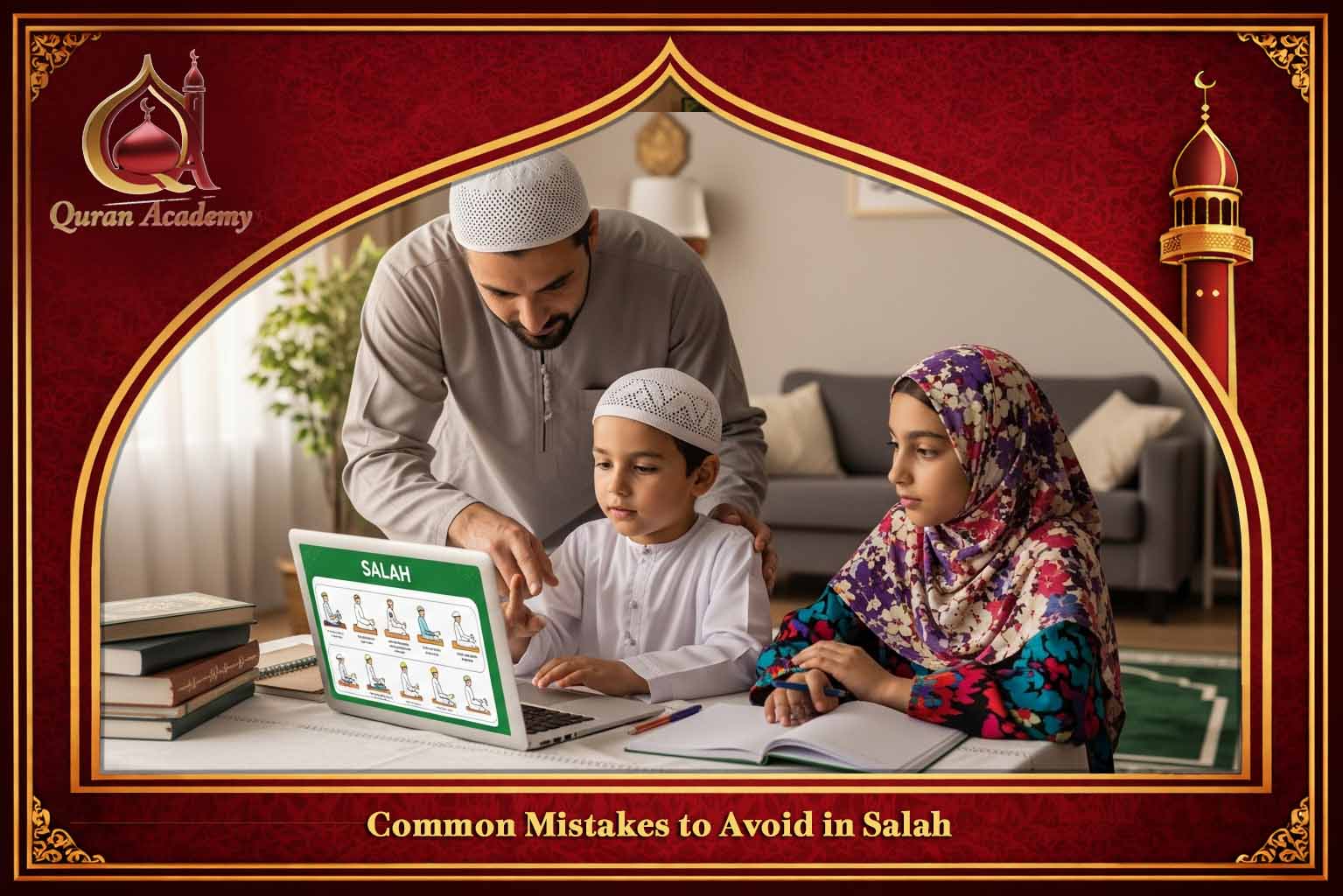
Common mistakes in Salah often include rushing through movements, losing focus during recitation, and incorrect posture in Ruku or Sujood.
Avoiding these errors helps improve concentration, accuracy, and the overall spiritual quality of prayer.
- Rushing through the movements of Salah without giving each position its proper calmness and time
- Not focusing during recitation, allowing the mind and heart to become distracted instead of reflecting on the meanings
- Incorrect posture in Ruku or Sujood, which affects the correctness and completeness of the prayer
- Skipping required Surahs or essential recitations during early learning stages instead of practicing them step by step
- Losing concentration easily due to external distractions or lack of mindfulness and preparation
Correcting these mistakes significantly improves the quality of prayer, making Salah more accurate, focused, and spiritually meaningful.
Importance of Consistency in Prayer
One of the most important aspects of learning Salah is consistency. Regular prayer is what transforms Salah from a daily obligation into a deeply rooted habit that shapes a Muslim’s character and lifestyle. Even if mistakes happen in the beginning, continuing to pray without giving up builds discipline, patience, and spiritual strength over time. Consistency also helps the heart become more focused and mindful during prayer, reducing distraction and increasing sincerity.
The Prophet Muhammad (ﷺ) emphasized praying on time as one of the most beloved actions to Allah, showing that punctuality in Salah is a key sign of true faith. When a person protects their prayers and performs them regularly, they develop a stronger connection with Allah and a greater sense of inner peace. Over time, consistent prayer becomes a source of stability in life, guiding a believer through challenges and keeping them grounded in their faith every day.
Frequently Asked Questions (FAQ)
The Frequently Asked Questions (FAQ) section provides quick answers to the most common doubts about Salah, helping beginners understand essential points clearly. It covers practical issues that are not fully explained in the main content, making learning easier and more complete for readers.
1. What should I do if I forget a step in prayer?
If a small mistake happens, you can perform Sujood As Sahw (prostration of forgetfulness) at the end of prayer.
2. Can I pray if I am still learning?
Yes, Islam encourages learning gradually. You can start with basic Surahs and improve over time.
3. Is it necessary to memorize everything before starting prayer?
No, learning step by step is allowed. What matters most is sincerity and effort.