Quran lessons alone do not cover everything a Muslim child needs to grow up with a solid understanding of their faith. Fiqh, basic akhlaq (manners), and the stories of the prophets matter just as much as recitation.
Quran Academy’s Islamic studies classes for kids go beyond Quran memorization, covering age-appropriate Fiqh, Islamic manners, and core beliefs, alongside Quran classes for kids for families who want both in one place.
Teaching Islam to Children in a Meaningful Way
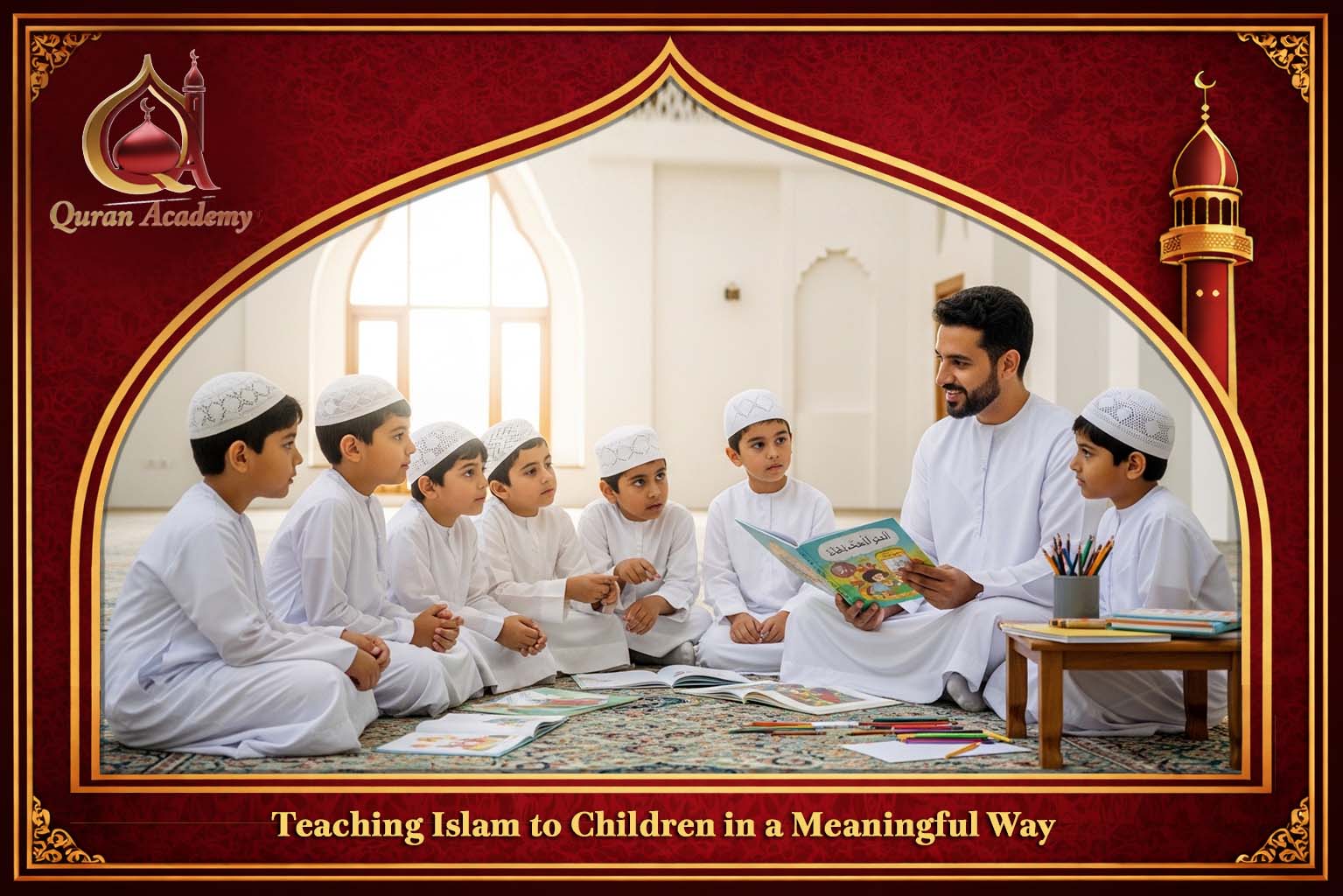
As a parent or teacher, you’ve probably wondered how to introduce Islam to children in a way that actually makes sense to them. Not just as rules to memorize, but as a living faith they can feel, understand, and practice in their daily lives.
Children do not learn the same way adults do. They learn through stories, emotions, repetition, and experience. That is why traditional methods alone are not enough anymore. What children need today is a balanced approach that combines storytelling, interaction, and real-life application.
This is where modern structured learning environments such as Quran Academy play an important role in supporting families who want a consistent and guided approach to Islamic education at home or online.
Online Quran Academy
Online learning has made it easier than ever for families to provide their children with quality Islamic education from the comfort of home. An Online Quran Academy offers a flexible and structured way for kids to learn Quran recitation, basic Islamic studies, and essential values without the limitations of time or location.
Through interactive lessons and one-on-one guidance, Quran Academy helps children stay engaged while building a strong connection with the Quran. This modern approach ensures consistent learning, making it suitable for busy families who still want to prioritize their child’s religious upbringing in an effective and enjoyable way.
Why Early Islamic Education Matters
Children are naturally curious and highly impressionable. Everything they see and hear in early life shapes their beliefs and personality later on.
When Islamic education starts early, it helps children:
- Build a strong sense of identity
- Understand their purpose in life
- Develop moral values such as honesty and kindness
- Grow with confidence in their faith
More importantly, early education makes Islam feel natural. Instead of being something “extra” they learn later, it becomes part of who they are.
Islamic learning is not just about memorizing information. It is about building character. When a child learns truthfulness, patience, gratitude, and respect through Islamic teachings, these values become part of their everyday behavior.
It also strengthens the bond between parents and children. Simple moments like reading a story about a prophet together or practicing daily duas can become meaningful family experiences that leave a lasting impact.
Core Elements of Islamic Education for Children
Teaching Islam to children should be structured but flexible. It should focus on key areas that are easy to understand and apply.
Stories of the Prophets
Children love stories, especially ones filled with adventure, lessons, and emotions. The stories of the prophets are perfect for this purpose.
Stories such as Prophet Nuh and the Ark, Prophet Musa and the sea, and Prophet Ibrahim’s strong faith help children understand important concepts like trust in Allah, patience, and courage.
Instead of just telling the story, parents and teachers can make it interactive. Children can draw scenes, act out parts of the story, or retell it in their own words. This transforms learning into an experience rather than memorization.
Beliefs and Pillars of Islam
Teaching belief (Aqeedah) and the Five Pillars of Islam is essential, but it should be done in a simple and engaging way.
For example:
- Shahada can be taught through identity cards that say “I believe in Allah”
- Salah can be demonstrated using prayer mats and visual guides
- Zakat can be explained through sharing games or donation jars
- Fasting can be introduced gradually with short practice periods
- Hajj can be explained using simple models or crafts
When children can see and experience these concepts, they understand them better and remember them longer.
Quran Learning for Kids
The Online Quran Classes for Kids is the heart of Islamic education. However, introducing it to children should start with love and familiarity, not pressure.
Instead of forcing memorization at the beginning, children should first listen to the Quran regularly. Over time, they begin to recognize sounds, rhythms, and verses naturally.
Gradual memorization can follow, but always with encouragement and positive reinforcement.
Understanding meaning is also very important. Even simple explanations help children connect emotionally with what they are reciting.
Programs like Quran Academy are often used by families who want structured Quran learning that combines recitation, memorization, and basic understanding in a child-friendly way.
Teaching Islamic Values Through Daily Life
Islam should not feel like a subject that ends after class. It should be part of daily life.
Simple habits can make a big difference:
- Saying “Bismillah” before eating
- Saying “Alhamdulillah” after sneezing
- Praying together as a family
- Making small daily duas before sleeping
When children see these actions repeated daily, they naturally adopt them.
This is where consistent learning approaches like those found in Quran Academy help reinforce daily Islamic habits in a structured way.
Learn also:learn islam online
The Role of Stories and Role Models
The Prophet Muhammad (peace be upon him) is the best role model for children.
His kindness, honesty, and patience provide real-life examples that children can relate to. Stories about how he treated others with respect or helped those in need are powerful teaching tools.
Instead of simply telling children to “be kind,” showing them how the Prophet behaved makes the lesson more meaningful and lasting.
Learn also:how to learn quran for kids
Modern Learning Methods for Children
Today’s children are growing up in a digital world. Traditional methods alone are no longer enough to keep their attention.
Modern learning approaches include:
- Interactive storytelling
- Educational games
- Visual learning tools
- Online structured lessons
This is where online quran classes for kids have become increasingly popular among parents who want flexible learning options that fit into busy schedules.
These online systems allow children to learn at their own pace while still receiving guidance from qualified teachers.
Some families also rely on Quran Academy for structured online learning that combines Islamic studies, Quran recitation, and character building in one platform.
What Makes a Good Islamic Learning Experience?
A successful learning environment for children should include:
- Simplicity in explanation
- Visual and interactive materials
- Gradual learning steps
- Focus on values before memorization
- Regular repetition without pressure
A good islamic class for kids should feel more like exploration than formal education. Children should feel encouraged to ask questions, express curiosity, and learn without fear of making mistakes.
Age-Based Learning Approach
Age-based learning approach in Islamic education ensures that children receive knowledge in a way that matches their cognitive and emotional development at each stage. This method helps simplify concepts, making learning more effective, engaging, and suitable for their understanding level.
Ages 3–5
At this stage, learning should be very simple:
- Short Islamic songs
- Names of Allah
- Basic manners
- Coloring activities
Ages 6–8
Children begin to understand stories and routines:
- Prophets’ stories
- Short surahs
- Basic prayer steps
- Islamic manners
Ages 9 and above
At this stage, children can handle deeper understanding:
- Meaning of Quranic verses
- Seerah of the Prophet
- Basic Islamic rulings
- Reflection and journaling
The Importance of Parental Involvement
No matter how good a learning program is, parents remain the strongest influence in a child’s life.
Children imitate what they see more than what they are told.
If they see their parents praying regularly, speaking truthfully, and showing kindness, they naturally follow those behaviors.
Parental involvement turns learning into a shared journey rather than a separate activity.
Read also: Seerah Course Online
Structured Learning Platforms
Organized learning systems like Quran Academy provide a structured curriculum that helps children progress step by step.
They also allow parents to track progress and stay involved in their child’s learning journey.
Many families choose Quran Academy because it combines flexibility with structured guidance, making it easier to maintain consistency.
Alongside general Islamic studies, many families also enroll their children in dedicated Quran classes for kids to build recitation and memorization skills side by side.
Repetition and Consistency in Learning
Children rarely learn something perfectly the first time. Repetition is essential.
However, repetition should not feel boring. It should come through different methods:
- Stories
- Games
- Activities
- Conversations
This keeps learning fresh while reinforcing knowledge.
Teaching Islam with Love, Not Fear
One of the most important principles in teaching children Islam is to focus on love rather than fear.
Children should grow up loving Allah, loving the Prophet, and loving their faith.
When Islam is taught with kindness and positivity, children develop a healthy and balanced relationship with their religion.
Challenges in Teaching Children Today
Modern parents face several challenges:
- Digital distractions
- Busy schedules
- Lack of consistent structure
- Too much information and not enough guidance
However, these challenges can be managed through structured routines and reliable learning systems.
The Future of Islamic Education for Kids
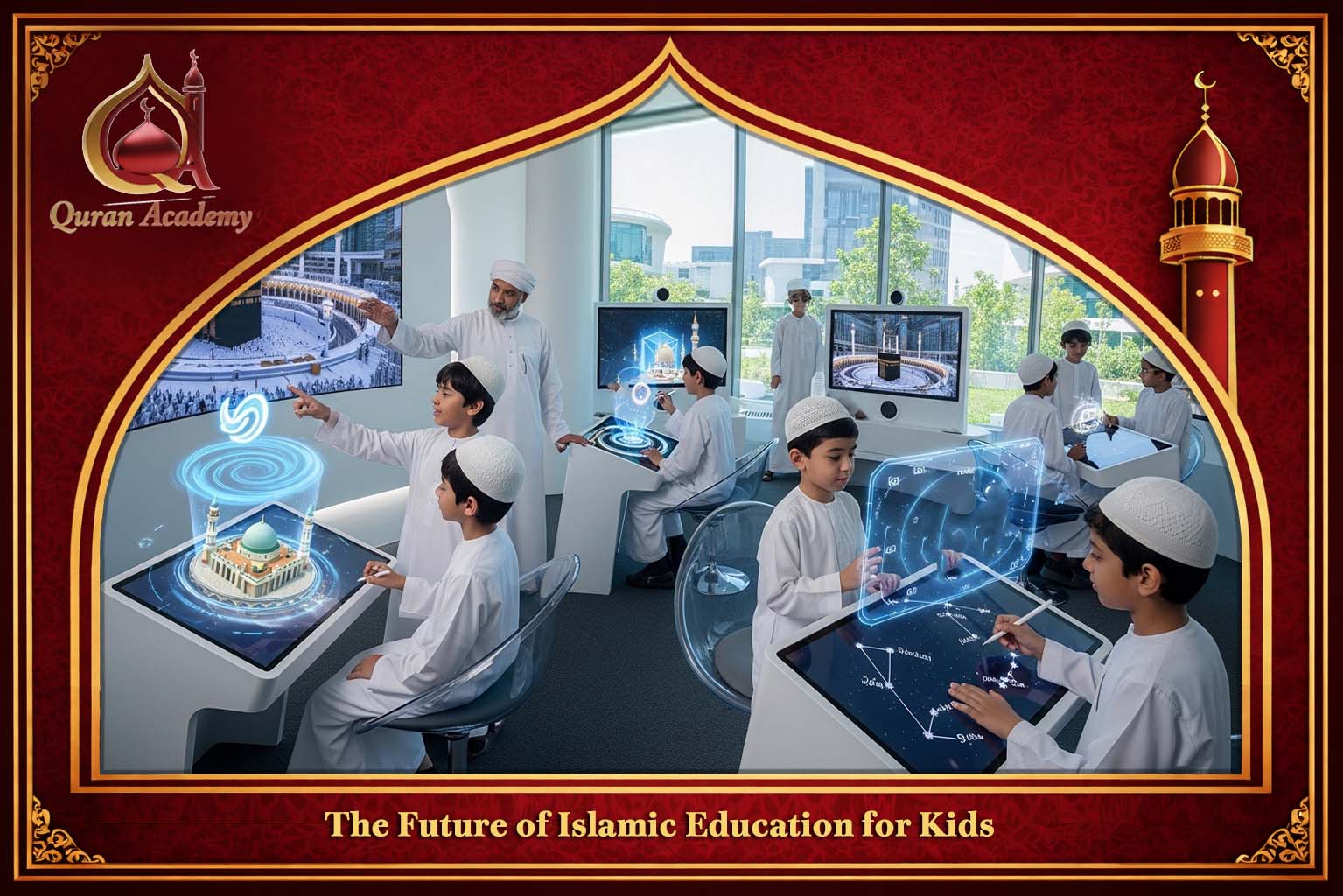
The future of Islamic education for kids is rapidly evolving toward a more interactive, flexible, and technology-driven approach. Instead of relying only on traditional classroom methods, families and educators are now embracing digital tools that make learning more engaging and accessible for children of all ages.
Today, children can learn through educational apps, animated videos, live online sessions, and interactive activities that help simplify complex Islamic concepts. This shift allows young learners to stay motivated while still building a strong connection with their faith.
Platforms like Quran Academy play an important role in this transformation by combining authentic Islamic knowledge with modern teaching methods designed specifically for children. This balance helps ensure that learning remains both accurate and enjoyable.
As more families choose Quran Academy, it becomes easier to maintain consistent and learn islam online in usa at home, even with busy schedules. This modern approach is shaping a future where Islamic education is more personalized, accessible, and aligned with the needs of today’s generation
Frequently Asked Questions
provide parents with quick and clear answers about Islamic learning for children, helping them understand the best methods and resources available. They also address common concerns about teaching approaches, online learning, and age-appropriate content in a simple and direct way.
1. What is the best age to start Islamic education for kids?
Islamic education can begin as early as 3 years old through simple songs, stories, and basic habits.
2. Are online Islamic classes effective for children?
Yes, especially when they are structured, interactive, and supervised by parents.
3. How can I make my child love learning Islam?
By using stories, games, positive reinforcement, and avoiding pressure or fear-based teaching.
In conclusion, building a strong Islamic foundation for children requires patience, consistency, and the right approach to learning. When education is delivered in a simple, engaging, and age-appropriate way, children are more likely to understand and love their faith.
Structured programs like Quran Academy help bridge the gap between traditional knowledge and modern learning methods, making Islamic education more accessible for today’s generation. With the right guidance and supportive environment, children can grow with strong values, clear identity, and a lasting connection to their religion.
Learn also: